Modern airline executives operate in an industry that screams complexity, speed, and constant pressure. Global competition, thin margins, regulatory scrutiny, and public expectation create an environment where decisions must be made in a haste and defended confidently. Yet the challenges faced today are not entirely new. Many echo a period in recent aviation history when leadership choices carried consequences that reshaped airlines from the inside out.
During the late twentieth century, particularly in the years of privatisation and deregulation, airline leadership underwent a profound transformation. Executives were no longer judged primarily on operational understanding or long term stewardship. Instead, success became increasingly associated with corporate confidence, expansion strategies, and financial performance. Airlines were treated as commercial instruments first and transport organisations second.
This shift placed extraordinary responsibility in the hands of senior leadership. Decisions taken in boardrooms affected not only shareholders but thousands of employees and millions of passengers. Yet distance grew between those making strategic choices and those responsible for delivering day to day operations. The separation of management from operational reality disrupted feedback loops that had once acted as safeguards.
One of the most significant risks of this era was the concentration of power. Strong personalities dominated decision making, often supported by advisers who reinforced prevailing views rather than challenged them. Dissent was seen as disloyalty. Caution was mistaken for a lack of ambition. Over time, this environment encouraged strategic overreach and discouraged honest assessment of risk.
Airline executives were also required to navigate political influence alongside commercial demands. Even as airlines moved towards private ownership, government interests continued to shape outcomes through regulation, competition policy, and public pressure. Balancing these forces required judgement, transparency, and restraint. When those qualities were absent, strategic decisions became reactive rather than considered.
Another recurring issue was the belief that scale equalled security. Expansion through fleet growth, route acquisition, or corporate manoeuvring was pursued aggressively. Yet size often amplified vulnerability. Fixed costs increased, organisational complexity grew, and flexibility diminished. When external conditions changed, whether through economic downturns or competitive disruption, large airlines struggled to adapt quickly.
The human cost of these decisions was substantial. Employees faced repeated restructuring, job losses, and uncertainty. Corporate loyalty weakened as trust eroded. Morale suffered as airline culture shifted away from shared purpose towards short term targets. These internal pressures rarely appeared in public narratives, yet they shaped the long term health of organisations.
For modern airline executives, these lessons remain highly relevant. Technology has advanced and markets have expanded, but the fundamentals of leadership have not changed. Aviation still demands humility, accountability, and an understanding that confidence must be grounded in reality. Strategic brilliance means little if it is disconnected from operational truth and human impact.
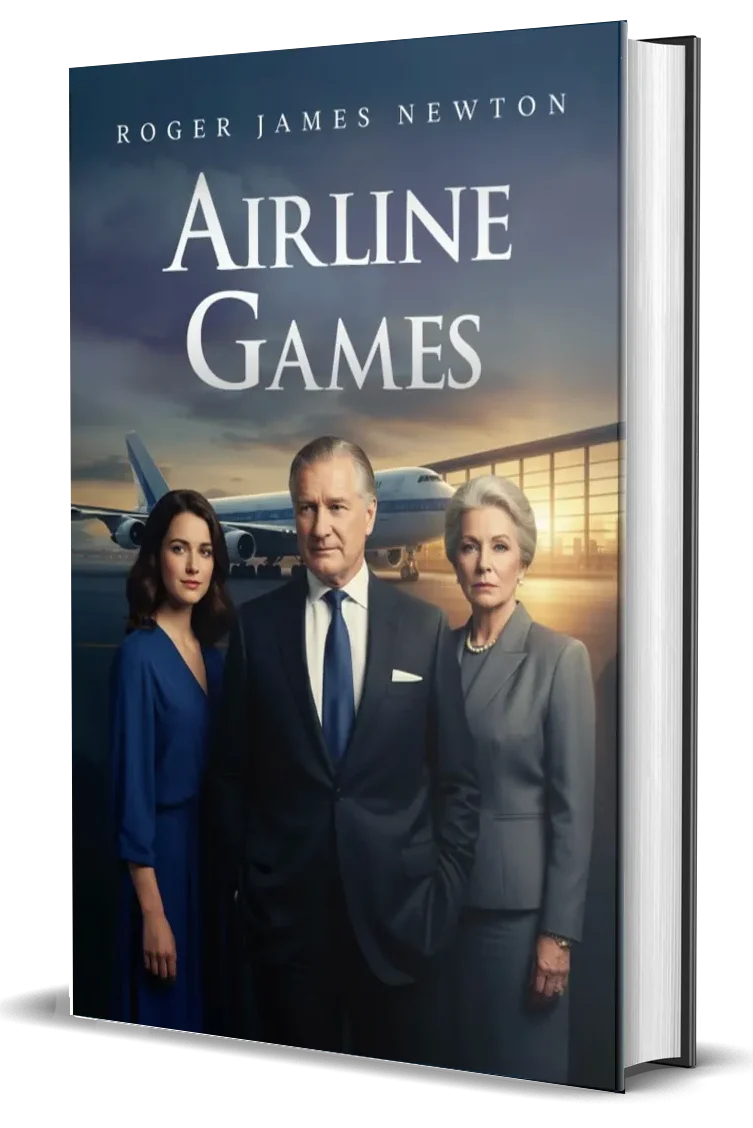
These themes are explored with clarity and insight in Airline Games by Roger James Newton. Although presented as a novel, the story draws heavily on real world experience and industry dynamics. It offers a revealing portrayal of airline leadership under pressure, exposing how ambition, rivalry, and ego can distort judgement. The narrative brings to life the personal and organisational consequences of decisions made at the highest levels.
What makes the book particularly compelling is its refusal to simplify complex situations. Characters are neither heroes nor villains, but individuals navigating ambition, responsibility, and fear. Their choices reflect the realities faced by executives who must balance personal success with corporate survival.
Airline Games is not about assigning blame. It is about understanding patterns. It reminds today’s leaders that aviation history is filled with warnings written quietly through restructures, failures, and lost trust rather than dramatic crashes.
By engaging with these lessons, modern airline executives can better appreciate the weight of their decisions. They can recognise the value of listening, questioning, and resisting the seduction of unchecked ambition. Airline Games serves as both an engaging narrative and a thoughtful mirror, reflecting how easily success can be undermined when leadership forgets that airlines are built not only on strategy and capital, but on people and judgement.
Book available on: https://www.amazon.com/dp/1970749296/.