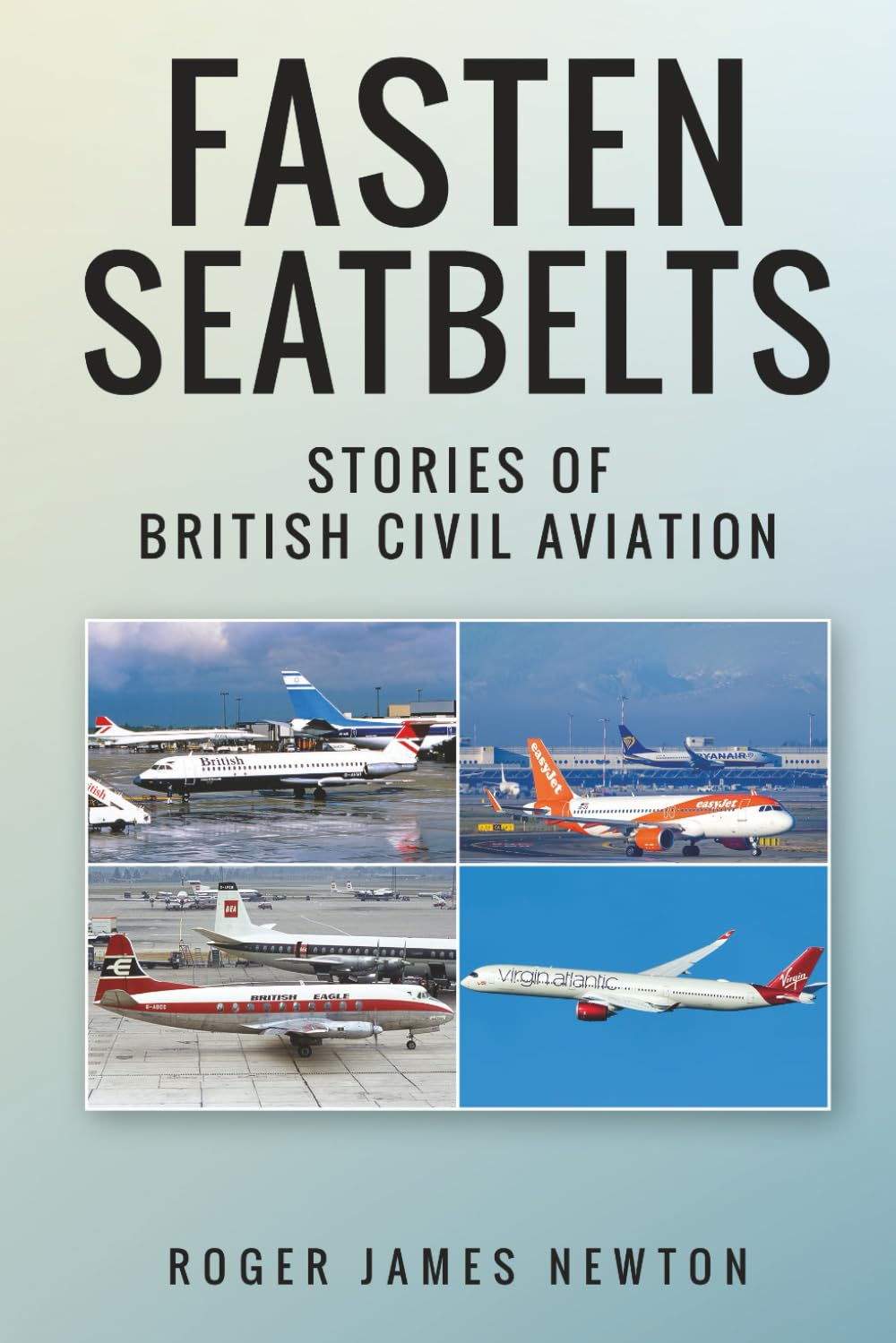
Some stories of progress begin with grand inventions, while others begin with ordinary people who dared to dream higher. However, when it comes to the history of British civil aviation, it is a blend of both, a story of grace and resilience that was shaped by engineers, pilots, and dreamers whose work forever changed how the world travels. In Fasten Seatbelts – Stories of British Civil Aviation, Roger James Newton revisits this story with rare insight, blending human experience with technological achievement.
It all started with ambition. In the 1920s, as commercial flight emerged from the shadows of wartime innovation, Britain’s early pioneers set out to connect distant corners of the Empire. The creation of Imperial Airways signalled the nation’s belief that aviation could bridge continents and unite people. Aircraft like the huge Handley Page biplanes and the glorious but short-lived Empire flying boats carried not just passengers but also pride—a symbol of Britain’s reach across the globe.
After the Second World War, Britain’s skies became laboratories of progress. The Comet, the Viscount, and later the BAC One Eleven, Trident and VC10 demonstrated how far British engineering could go. Each of these aircraft told a different part of the story: the boldness of innovation, the challenges of safety, and the constant drive to stay ahead in an increasingly competitive industry. Newton describes these milestones with balance and precision, revealing how success was often shadowed by political interference and economic constraint.
But aviation has always been about more than technology. It is about the people behind the machines. Newton’s book pays tribute to the designers who sketched dreams into blueprints, the pilots who tested unproven models, the workers who built aircraft piece by piece and the entrepreneurs who battled officialdom and politics to bring air travel to the masses. Moreover, their combined efforts gave rise to global icons like the Concorde, the supersonic symbol of elegance and ambition that still captures the imagination today.
The story also follows the transformation of the business itself. From government control to open markets, the evolution of British airlines reflects the country’s broader economic shifts. British Airways emerged as a global brand, while independent carriers like Laker Airways and Virgin Atlantic challenged conventions with creativity and competition. These changes mirrored the larger movement from state management to market freedom—a journey as turbulent as it was transformative.
What makes Britain’s aviation story unique is its human dimension. The triumphs and tragedies alike reveal a constant thread of courage. Whether facing wartime necessity, post-war rebuilding, or twenty-first-century environmental challenges, Britain’s aviation community has always looked forward, learning from every flight.
For anyone who loves the story of flight and who are willing to learn more about British aviation, Fasten Seatbelts – Stories of British Civil Aviation offers more than history. This book offers a fresh perspective and reminds us that the skies above Britain are not just routes for aircraft but chapters of human achievement that continue to shape aviation today. The book also brings the reader up to date with the current state of civil aviation, world-wide, including the, as yet, unresolved ongoing environmental challenges.
Grab your copies from Amazon: https://www.amazon.com/dp/1969644400.
Fasten Seatbelts – Stories of British Civil Aviation by Roger James Newton is a richly detailed account of more than a century of Britain’s aviation journey, tracing its rise from the pioneering post-war era to the modern jet age. Drawing on personal experience and extensive research, Newton explores how engineering excellence, government policy, and human determination shaped one of the world’s most influential air industries.
The book highlights key milestones such as the founding of Imperial Airways, the introduction of the de Havilland Comet—the first jetliner—and the ambitions behind the Concorde. It also explores issues like privatization and industrial decline, highlighted by the dramatic collapse of Rolls-Royce in February 1971. Newton, drawing on his experience at Rolls-Royce during the 1970s, provides an insider’s perspective on the engines, companies, and individuals shaping flight innovation. Combining history, insights, and reflections, Fasten Seatbelts honors Britain’s lasting influence in global aviation and celebrates the visionaries whose bravery kept the country’s skies open.