In the early days of aviation, flying boats were some of the most innovative and vital aircraft in British aviation history. These graceful and versatile machines not only provided the foundation for transatlantic air travel but also played a crucial role in military and commercial operations across the globe. While the flying boat era eventually gave way to land-based aircraft, their impact on British aviation remains an important chapter, one that is often overlooked but worth remembering.
Flying boats, as their name suggests, were designed to take off and land on water, making them particularly well-suited for long-distance flights over oceans where airports were scarce. The most iconic of these early flying boats were built by companies like Short Brothers and Supermarine, who were at the forefront of British aeronautical engineering in the interwar years and during World War II.
One of the most famous flying boats was the Short Empire Flying Boat, which made its first flight in 1936. This aircraft was a marvel of engineering, capable of carrying both passengers and cargo across long distances. The Empire Flying Boat was used by Imperial Airways, and it was a key part of Britain’s effort to connect the farthest reaches of the British Empire. The flying boats could make long-haul flights that land-based aircraft could not, and they became the workhorses of transcontinental and transoceanic travel.
The beauty of the Empire Flying Boats was not only their ability to reach far-flung destinations but also their unique design. The flying boats had a graceful, streamlined body and massive wings, allowing them to glide smoothly over water. While other aircraft of the era were still limited to landing on land-based airstrips, flying boats could take off and touch down in areas without a developed infrastructure. This made them indispensable for flights to remote territories in Africa, Asia, and the Pacific, as well as across the Atlantic.
Despite their initial success, flying boats had their drawbacks. While they were ideal for long-distance flights over water, they were cumbersome to operate. The need for vast water runways, the impact of saltwater corrosion, and the inability to fly as quickly as land-based aircraft eventually made them less competitive. However, during their heyday, flying boats were the epitome of luxury air travel, offering passengers comfort and an unparalleled level of service.
In addition to their role in commercial aviation, flying boats also played a significant role in the military during World War II. Aircraft like the Short Sunderland were used extensively by the Royal Air Force (RAF) for reconnaissance, anti-submarine warfare, and search-and-rescue missions. These military flying boats were heavily armed and capable of operating in remote areas where other aircraft could not reach. The Sunderland, in particular, was one of the most successful flying boats of the war, contributing to the success of the Battle of the Atlantic by protecting vital convoys from German U-boats.
While British flying boats were at the forefront of aviation during the 1930s and 1940s, the post-war era saw the decline of this unique class of aircraft. The advent of faster and more efficient land-based aircraft, like the de Havilland Comet and the Boeing 707, rendered flying boats obsolete. New commercial airliners could cover long distances more quickly and with greater economic efficiency, making flying boats less viable in the modern aviation landscape.
The last of the major British flying boats were retired by the mid-1950s, marking the end of an era. Aquila Airways and other smaller operators attempted to keep the flying boat tradition alive with services to holiday destinations in the Mediterranean, but by the late 1950s, even these smaller operations ceased. The last British flying boat, the Short Solent, was retired in 1960, and with that, the flying boat era was officially over.
Despite their decline, the flying boat era remains a fascinating and essential part of British aviation history. These aircraft were more than just machines; they were symbols of the ambition and vision of British engineers and entrepreneurs who sought to conquer the skies and the seas. They allowed Britain to establish air routes across vast oceans and enabled the country to maintain its global presence through air travel during the height of the Empire.
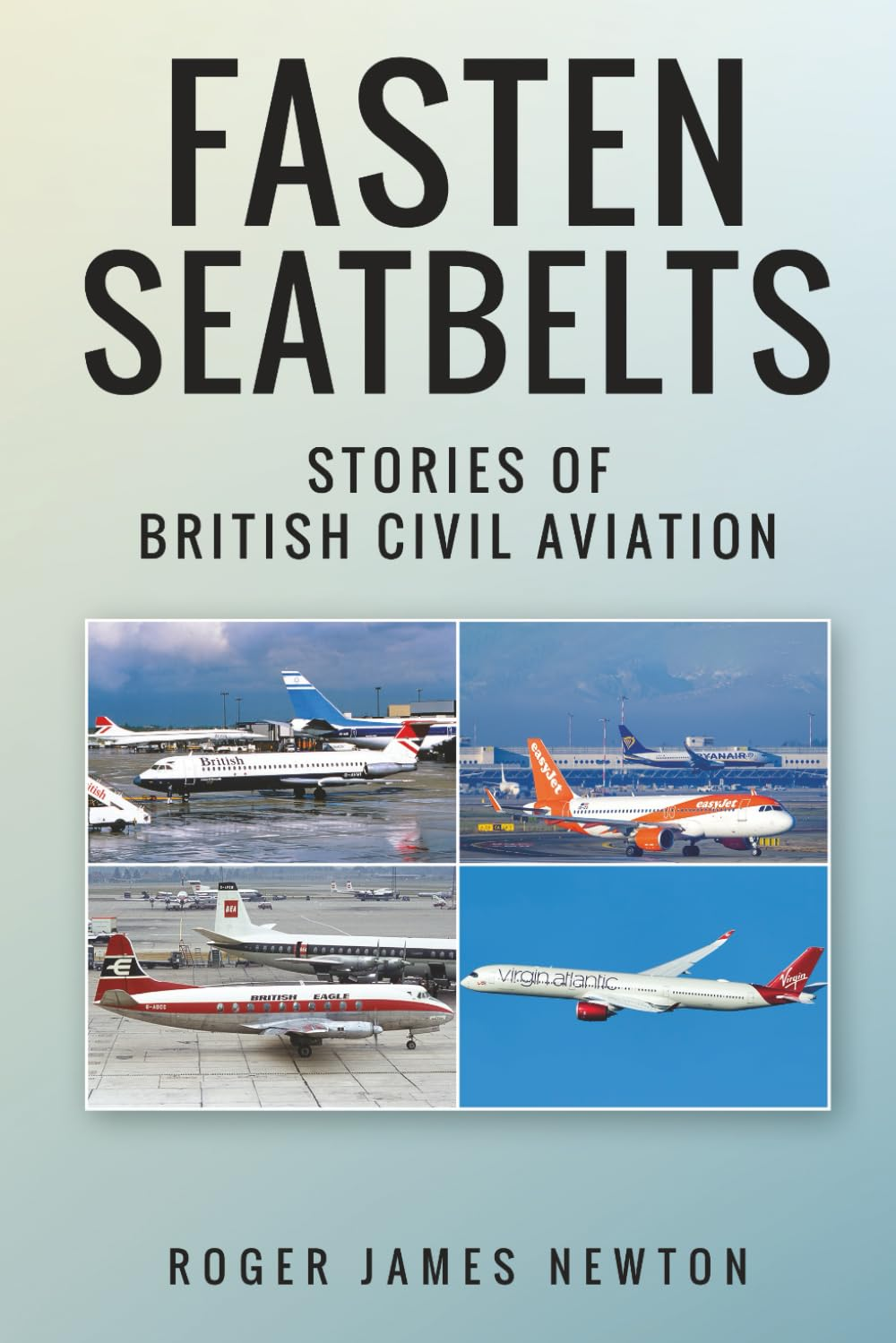
Roger James Newton’s book, Fasten Seatbelts – Stories of British Civil Aviation, provides a comprehensive look at the rise and eventual fall of flying boats. With captivating details and historical insight, Fasten Seatbelts – Stories of British Civil Aviation explores how these aircraft played an essential role in the development of British aviation and global air travel. Their legacy is one of innovation, adventure, and a time when aviation was still in its infancy, and the world was waiting to be connected.
For those interested in the forgotten history of British aviation, Fasten Seatbelts – Stories of British Civil Aviation is a must-read. It serves as a tribute to the flying boats and the era they represent—one of elegance, daring, and the endless pursuit of new horizons in aviation.
The book is now available on Amazon: https://www.amazon.com/dp/1969644400