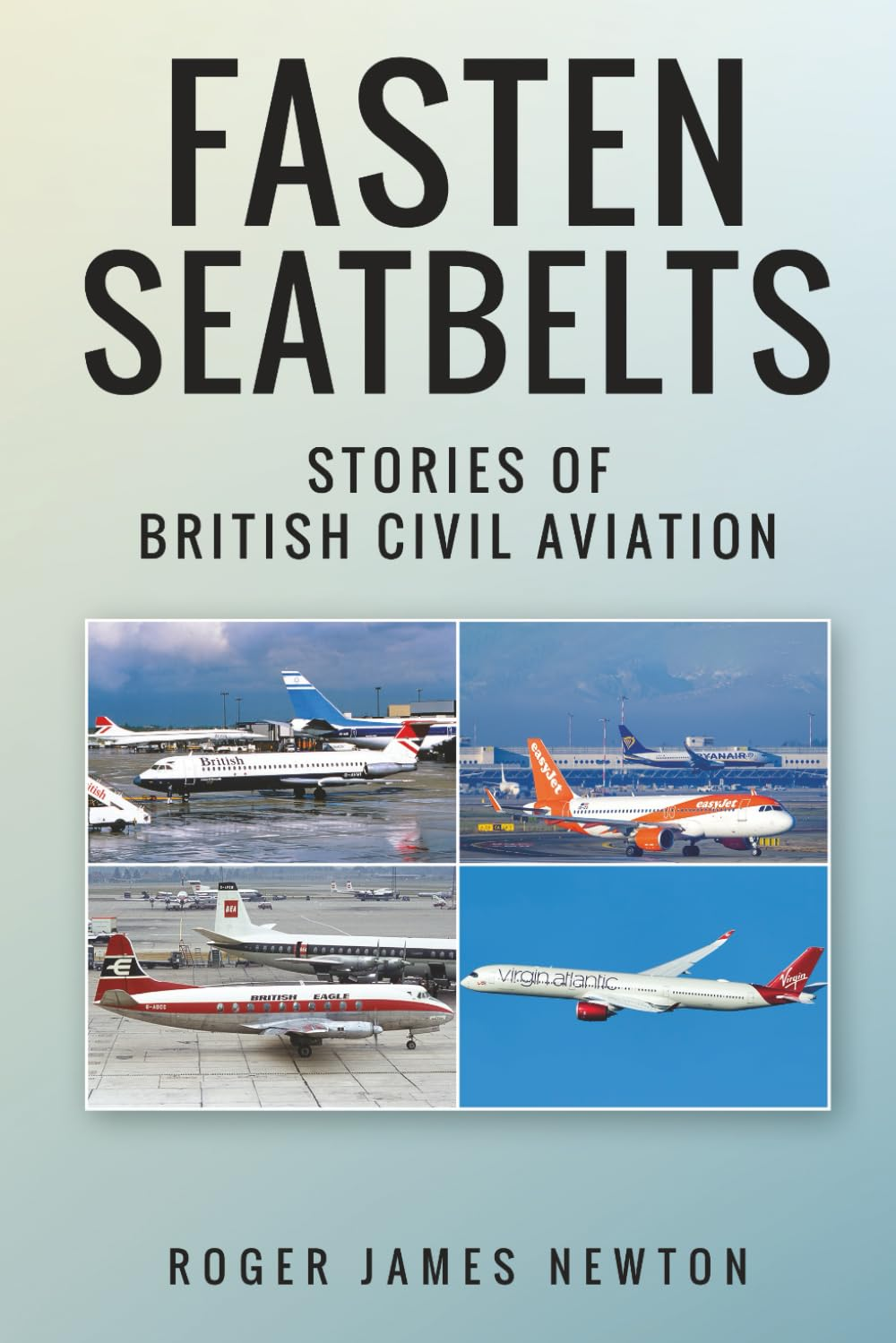
Every nation has its defining achievements, and for Britain, few have shaped its modern identity as much as flight. The story of British aviation is not just one of machines and mechanics; it is a story of imagination, perseverance, and pride. In Fasten Seatbelts – Stories of British Civil Aviation, Roger James Newton brings this legacy to life. By showing how Britain built its place in the sky through innovation, courage, and an enduring belief in progress, he is able to draw a fine line between history and the modern aviation that connects both these timelines subtly, shaping our understanding of how Britain changed the way we see aviation today.
The roots of this story date back to the years following World War I. Britain emerged from the conflict with both experience and ambition. The engineers who had built military aircraft for survival now turned their skills to peace, creating a new industry that would connect the country to the world. Companies like de Havilland, Handley Page and Vickers became symbols of innovation, crafting aircraft that were both practical and aesthetically pleasing. Newton captures the spirit of these early years, describing how small workshops and big dreams shaped the beginnings of civil flight.
As the years progressed, aviation evolved into more than just an industry. It became a reflection of national identity. In the 1930s, air travel symbolized elegance and progress. Imperial Airways, with its long-distance routes to Africa and Asia, serviced by the fleet of glorious Empire Flying Boats, embodied the British ambition to reach beyond its shores. These flights were slow and uncertain by today’s standards, but they carried a powerful message: that Britain’s ingenuity could defy distance.
After the Second World War, the country faced new challenges. The skies became both a stage and a proving ground for technological innovation. The de Havilland Comet, the world’s first commercial jetliner, represented Britain’s leap into the future. It showed that British engineers were capable of transforming how people traveled. Yet, when tragedy struck with early Comet crashes, the setback became a lesson that strengthened the entire industry. Newton’s narrative reminds readers that progress often comes with risk, and Britain’s aviation story is defined as much by resilience as by success.
The 1950s and 1960s were decades of ambition. The Vickers Viscount, the BAC One-Eleven, and the VC10 stood as proof of a thriving manufacturing spirit. At the same time, the government protected its nationalized airlines, BOAC and BEA, whilst gradually allowing the Independent airlines more scope for growth. . Newton describes the balance between progress and politics that shaped aviation policy and carefully weaves these elements together, showing how Britain’s skies became a mirror of its social and economic evolution.
The Concorde era of the 1970s brought a new kind of pride. This supersonic marvel, born from British and French collaboration, was both an engineering triumph and a cultural icon. Though it ultimately became commercially unsustainable, it demonstrated Britain’s ability to dream boldly. In the book, Newton describes Concorde not simply as a machine, but as a statement of human aspiration.
Fasten Seatbelts uses clear, well-founded storytelling to show how Britain developed its aviation identity—driven by perseverance, collaboration, and a love for innovation. Newton’s story highlights that Britain’s role in aviation was achieved through years of dedication, not luck.
For anyone fascinated by the story of how a small island nation helped shape global flight, Fasten Seatbelts – Stories of British Civil Aviation offers a moving and authentic perspective on Britain’s enduring role in aviation history and celebrates the people who made it possible.
Grab your copies from Amazon: https://www.amazon.com/dp/1969644400.
Fasten Seatbelts – Stories of British Civil Aviation by Roger James Newton is a richly detailed account of more than a century of Britain’s aviation journey, tracing its rise from the pioneering post-war era to the modern jet age. Drawing on personal experience and extensive research, Newton explores how engineering excellence, government policy, and human determination shaped one of the world’s most influential air industries.
The book highlights key milestones such as the founding of Imperial Airways, the introduction of the de Havilland Comet—the first jetliner— the growth of air travel from the 1960s through the introduction of innovative Package Holidays and the ambitions behind the Concorde. It also explores issues like privatization and industrial decline. Newton, drawing on his experience at Rolls-Royce during the 1970s, provides an insider’s perspective on the engines, companies, and individuals shaping flight innovation. Combining history, insights, and reflections, Fasten Seatbelts honors Britain’s lasting influence in global aviation and celebrates the visionaries whose bravery kept the country’s skies open.