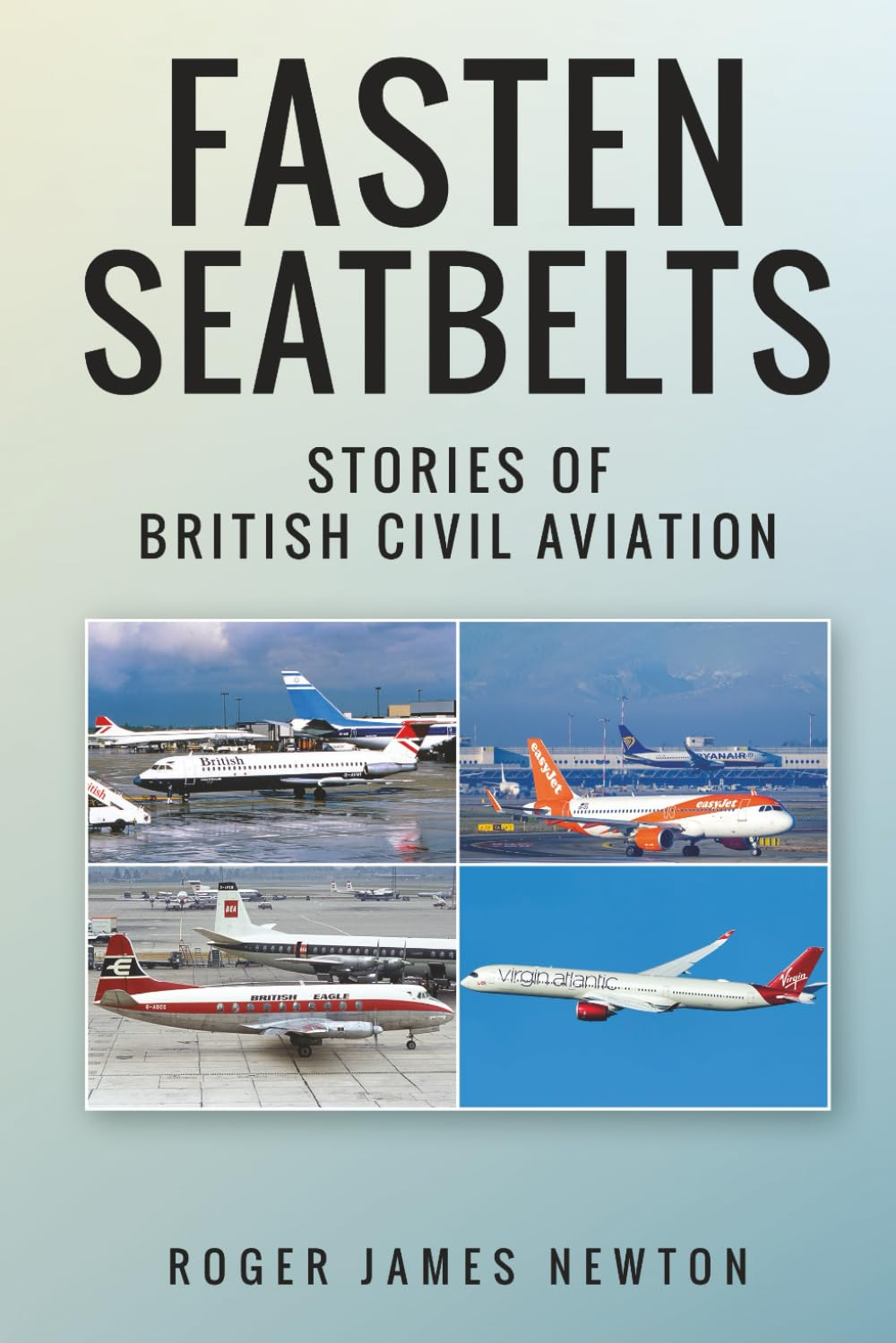
Every great industry has a story of ambition and recovery. But only a few are as remarkable as Britain’s aviation journey. From its pioneering start in the 1920s to the jet-age heights of the 1960s and the corporate shifts of the modern era, British civil aviation has soared, stumbled, and reinvented itself more than once. Fasten Seatbelts – Stories of British Civil Aviation by Roger James Newton captures this evolution with clarity and realism, showing how technology, politics, and perseverance shaped the nation’s wings.
In the years after the First World War, Britain faced both opportunity and challenge. The same engineers who built military aircraft now turned their skills to peaceful innovation. Companies like de Havilland, Handley Page and Vickers led a wave of experimentation that would help define the future of flight. Early passenger routes connected London to Paris and beyond, marking the start of a new era where air travel symbolised modernity and optimism.
The Second World War changed everything again. The aircraft that defended Britain also created the short-term foundation for its post-war aviation boom. As peace returned, the government sought to transform wartime ingenuity into civilian progress. In 1945, the Brabazon Committee produced specifications for a range of new British civil airliners, which later had varying degrees of success. The state-owned airlines, BOAC and BEA, were at the forefront of rebuilding air travel. Their success, however, came with bureaucracy and economic strain—a pattern that would repeat throughout the next half-century.
The 1950s marked a defining decade. Britain launched the world’s first commercial jetliner, the de Havilland Comet, a symbol of national pride and technological leadership. Yet tragedy soon struck when early structural failures led to catastrophic crashes. The fallout was devastating, but it also revolutionised aviation safety and design. From those lessons rose a stronger industry—proof that progress often demands perseverance.
In the 1960s and 70s, the story became one of consolidation and change in order to create a British civil aircraft manufacturing industry capable of meeting the growing financial and technological changes. British aircraft manufacturing thrived briefly with the successful BAC One-Eleven and the less successful Hawker Siddeley Trident, but competition from larger-scale American producers began to erode market share. The creation of British Aerospace and its involvement in the Airbus consortium signalled a pragmatic shift toward collaboration over competition. Newton’s book reveals how these decisions reflected the economic and political realities of post-imperial Britain— a country and an aviation industry struggling to adjust to a globalised world.
By the 1980s, deregulation and privatization reshaped the skies once again. The merger of BOAC and BEA into British Airways, followed by its privatization in 1987, ushered in a new business-driven model. Figures like Richard Branson disrupted the scene with Virgin Atlantic, proving that British entrepreneurship still had altitude. Even as full-scale aircraft manufacturing declined, the legacy of British engineering lived on in Rolls-Royce, also privatized in 1987 after sixteen years of State ownership, whose engines continued to power aircraft worldwide.
Newton’s narrative in Fasten Seatbelts reminds us that Britain’s aviation history is not a tale of loss but of resilience. The rise, fall, and renewal of its air industry reflect a nation’s ability to adapt, innovate, and take flight again. For readers fascinated by how ambition, politics, and engineering, together with the vision and risk-taking of the industry’s key players, shaped the world’s skies, this book is a tribute to Britain’s enduring role in aviation history.
Grab your copies from Amazon: https://www.amazon.com/dp/1969644400.
Fasten Seatbelts – Stories of British Civil Aviation by Roger James Newton is a richly detailed account of more than a century of Britain’s aviation journey, tracing its rise from the pioneering post-war era to the modern jet age. Drawing on personal experience and extensive research, Newton explores how engineering excellence, government policy, and human determination shaped one of the world’s most influential air industries.
The book highlights key milestones such as the founding of Imperial Airways, the introduction of the de Havilland Comet—the first jetliner—and the ambitions behind the Concorde. It also explores issues like privatization and industrial decline. Newton, drawing on his experience at Rolls-Royce, provides an insider’s perspective on the engines, companies, and individuals shaping flight innovation. Combining history, insights, and reflections, Fasten Seatbelts honors Britain’s lasting influence in global aviation and celebrates the visionaries whose bravery kept the country’s skies open.