For much of aviation history, airlines were defined by aircraft, routes, and the people who flew them. Decisions were often made by those with experience, shaped by safety, reliability, and long term growth. Over time, however, the centre of gravity shifted. By the late twentieth century, airlines increasingly became arenas for corporate power struggles, where boardrooms mattered more than runways and balance sheets carried greater weight than flying hours.
This transformation was especially visible during the 1980s, a decade marked by privatisation, deregulation, and aggressive competition. Airlines were no longer seen primarily as transport providers, but as corporate assets. Financial performance, market dominance, and shareholder value became the defining measures of success. With that shift came a new kind of conflict, one fought through strategy papers, brutal negotiations, and political influence rather than technical innovation.
Leadership styles changed accordingly. Airline executives were expected to behave like corporate warriors, defending territory, expanding influence, and eliminating rivals. Mergers, acquisitions, and reshaping became routine. Entire workforces were reshaped through cost cutting programmes, pension revisions, and large scale redundancies. These decisions were often justified as necessary for survival, yet they carried lasting consequences for corporate culture and public trust.
Competition between airlines grew increasingly personal. Rival executives pursued dominance not only through commercial strategy but through reputation and perception. Public relations, branding, and media influence became weapons. Internally, loyalty was tested as senior figures manoeuvred for advantage, sometimes underestimating colleagues to secure their own position. The airline industry, once rooted in collaboration and shared standards, became fragmented by ambition.
Government intervention added another dimension to these corporate battles. Even as airlines moved towards privatisation, political considerations remained powerful. Route placements, regulatory approvals, and competition policy could decide the fate of an airline as surely as its balance sheet. Executives learned to navigate not only markets but ministries, balancing public accountability with private ambition.
These conflicts rarely began with performative failure. Instead, they developed over time through overconfidence, misjudged expansion, and a belief that scale alone guaranteed success. When problems emerged, responses were often defensive rather than reflective. Warnings were dismissed, dissent was sidelined, and corrective action delayed. By the time consequences became visible, recovery was difficult or impossible.
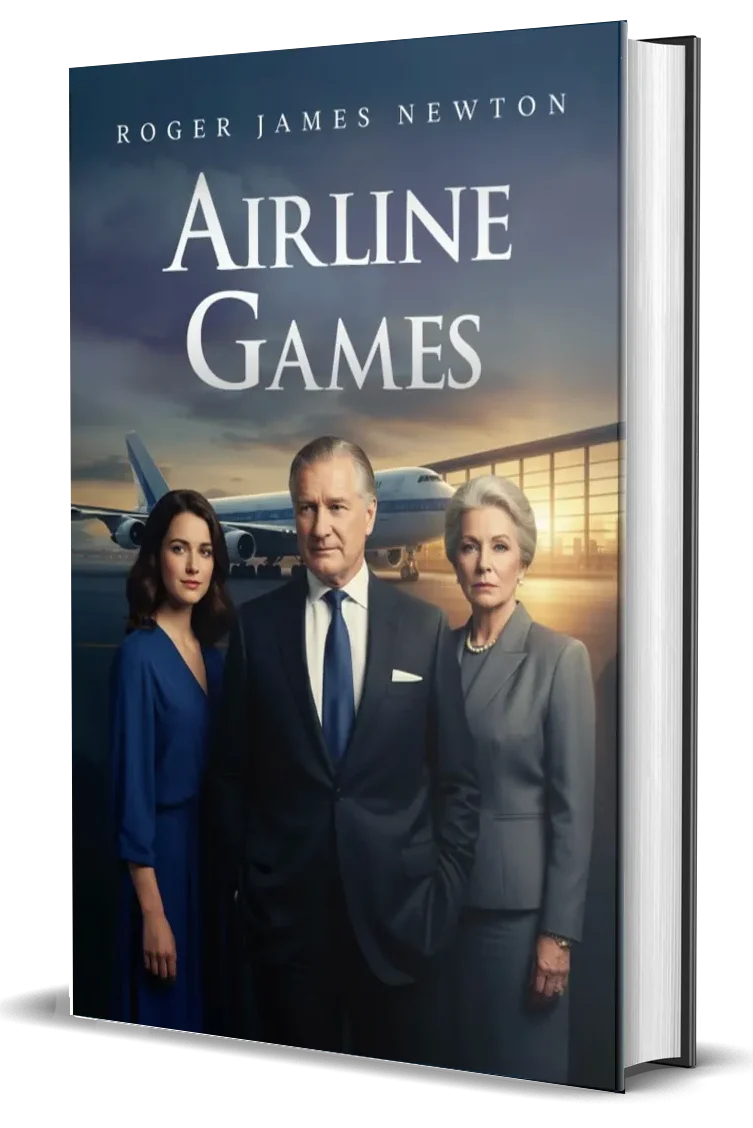
These themes are explored through a fictional lens in Airline Games by Roger James Newton. Drawing on extensive real world experience within British industry, the novel presents a compelling portrayal of how airlines became corporate battlegrounds. While the characters and events are fictional, the pressures, personalities, and power dynamics reflect realities familiar to those who witnessed the transformation of British aviation during this era.
The book captures the tension between tradition and modern corporate thinking, showing how decisions made at the top reverberate through entire organisations. It highlights the human cost of strategic conflict, from executives wrestling with ambition to employees facing uncertainty and loss. Through its narrative, Airline Games offers insight into how leadership choices shape not only companies but lives.
Understanding when airlines became corporate battlefields helps explain many of the challenges the industry still faces today. It reveals how culture, governance, and accountability matter as much as aircraft and routes. It also serves as a reminder that aviation, for all its technology and scale, remains deeply human.
For readers interested in the forces that reshaped British airlines from the inside, Airline Games provides an engaging and thought provoking exploration of an industry where the fiercest struggles were often fought on the ground rather than in the air.
Book available on: https://www.amazon.com/dp/1970749296/.